
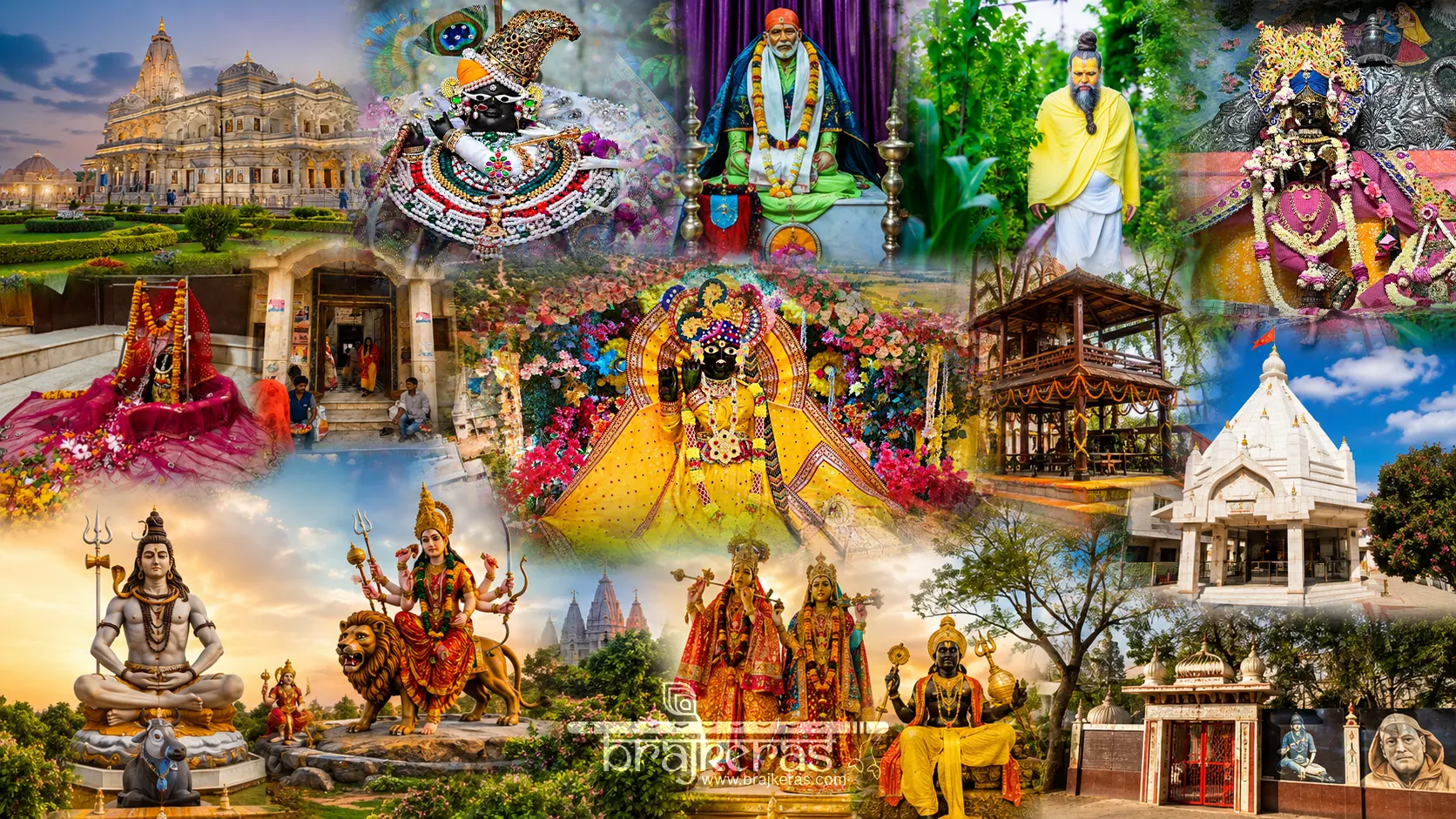
Explore 18 sacred holy places and temples in Vrindavan connected with Shri Radha Krishna, from Banke Bihari and Radha Raman to Nidhivan, Seva Kunj, Prem Mandir and ISKCON.
Table of Contents
“Radhe Radhe!”
You’ll hear these two words everywhere in Vrindavan.
A shopkeeper may say them when you enter. A rickshaw driver may call them out while passing through a narrow gali. Devotees greet each other with the same words. Somewhere nearby, you may hear a group singing the names of Shri Radha and Krishna.
Slowly, you begin to realise that Vrindavan has its own rhythm.
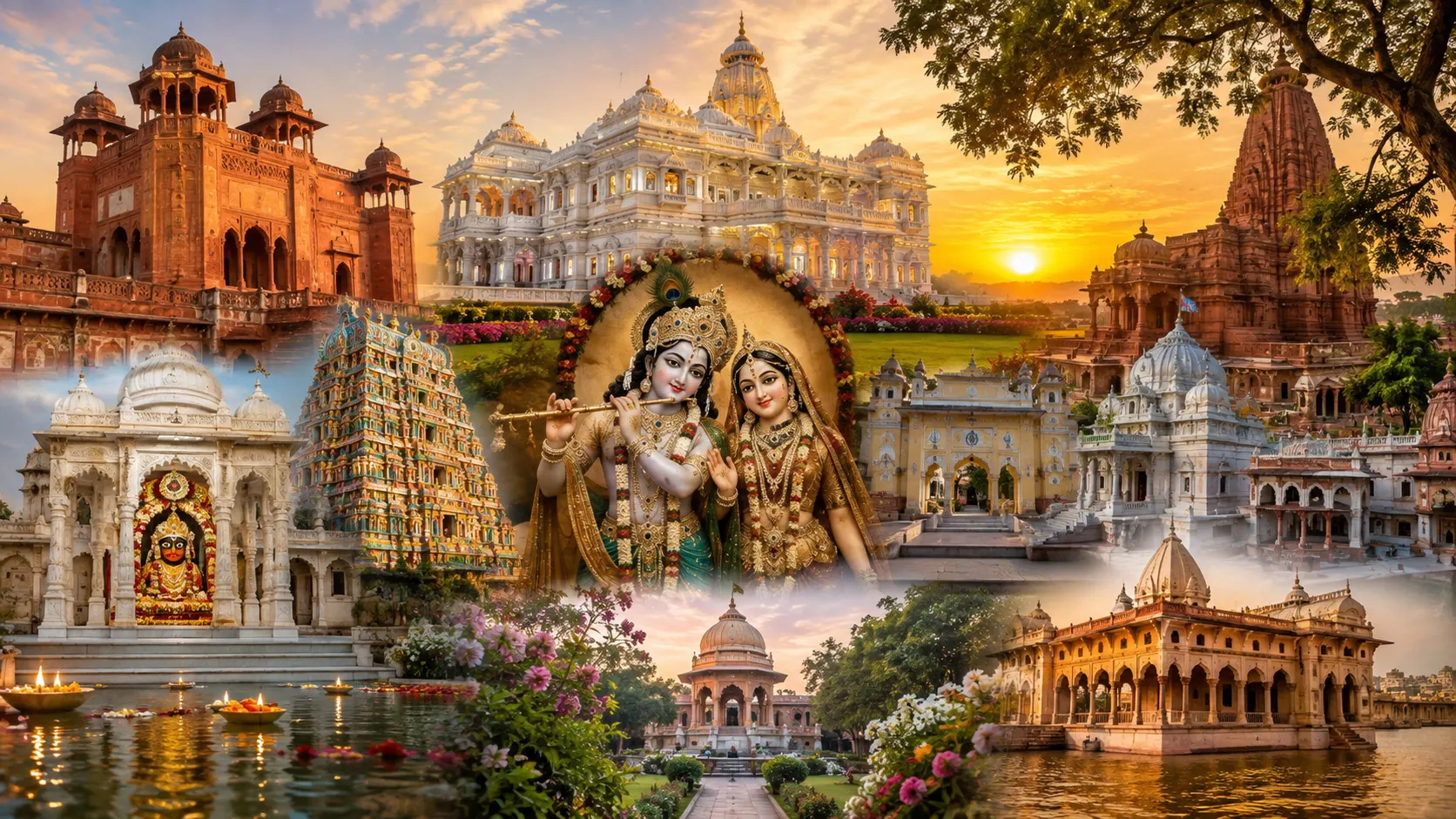
For devotees, Vrindavan is Shri Radha Krishna’s Leela Bhoomi. Ancient temples, sacred groves, Yamuna ghats and narrow lanes are connected with the divine pastimes of Shri Radha, Shri Krishna, the gopis and the saints of Braj.
Some temples are centuries old. Some are relatively new. Some impress you with grand architecture; others are small enough to walk past without noticing. Yet size carries little weight here.
A tiny doorway can lead to a place worshipped by devotees for hundreds of years.
If you’re planning to visit the temples in Vrindavan, these 15 sacred places offer a good starting point.
1. Shri Banke Bihari Temple — Where Vrindavan Feels Like Vrindavan
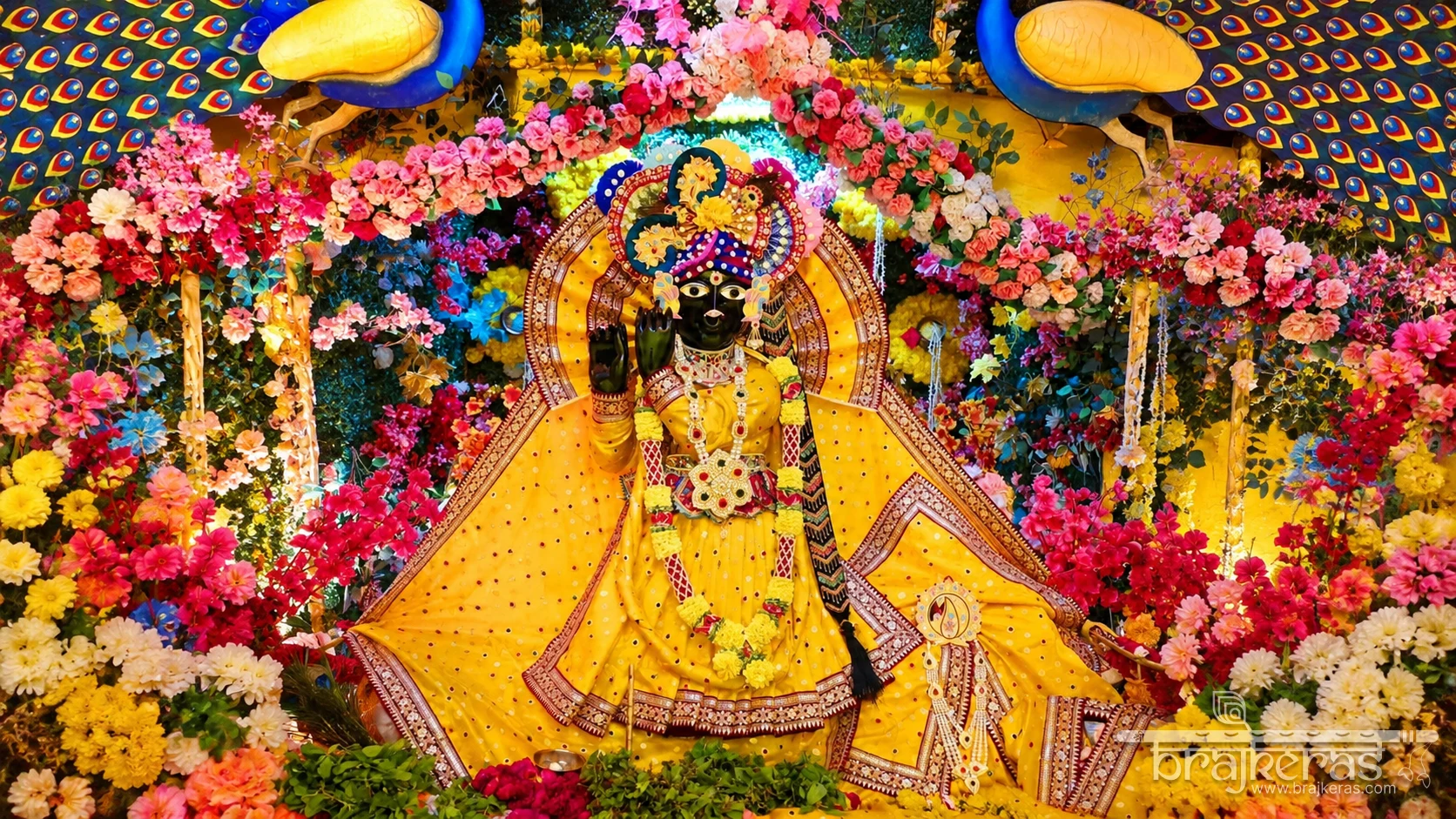
Ask ten people which temple you should visit first in Vrindavan and there’s a fair chance several will say, Banke Bihari Temple.
Thakur Shri Banke Bihari Ji is one of the most beloved forms of Shri Krishna worshipped in Braj.
The name Banke Bihari has a lovely meaning. Banke refers to the charming three-bent posture of Krishna, and Bihari refers to the divine enjoyer who performs loving pastimes.
The deity is associated with the great saint Swami Haridas, whose devotion occupies a special place in Vrindavan tradition.
Darshan here has a character of its own.
A curtain is repeatedly drawn before Banke Bihari Ji and opened again after short intervals. So you wait, the curtain opens, everyone tries to catch Bihari Ji’s darshan—and then it closes.
Just a few seconds.
Then again.
It may sound unusual until you’re standing there.
During Holi, Hariyali Teej, Janmashtami and other major celebrations, the temple draws huge crowds. Early hours on regular weekdays tend to feel easier than festival days or weekends.
And yes, keep your glasses, phone and loose belongings secure. Vrindavan’s monkeys have developed rather impressive negotiation skills.
2. Prem Mandir — A Newer Temple Telling Old Stories
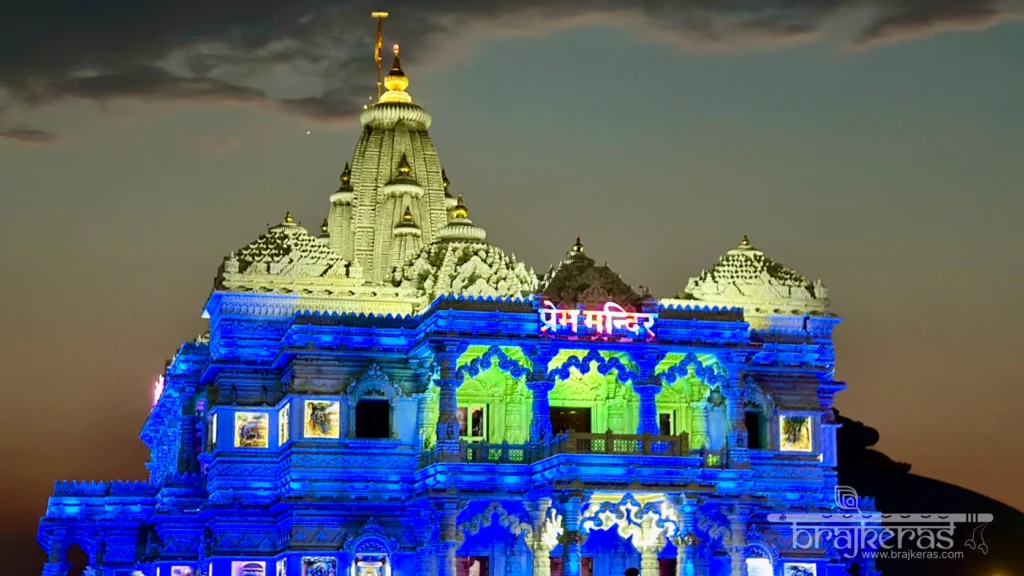
Prem Mandir presents a striking contrast to old Vrindavan.
Built by Jagadguru Shri Kripalu Ji Maharaj, the large white marble temple has become one of the most photographed places in the city.
Its grounds contain life-sized scenes depicting leelas of Shri Radha Krishna, including Govardhan Leela and other episodes familiar to devotees from childhood.
The temple is impressive during the day, but many visitors prefer coming near sunset. As evening arrives, the illuminated marble gives the complex a very different appearance.
Families often spend longer here than expected. There’s quite a lot to see, and the open grounds provide more breathing room than the tightly packed lanes around some older Vrindavan temples.
Yet architecture is only the outer layer. The stories represented around Prem Mandir point visitors back to Krishna’s Braj leelas.
3. ISKCON Krishna Balaram Mandir — Where the Whole World Sings Krishna’s Name
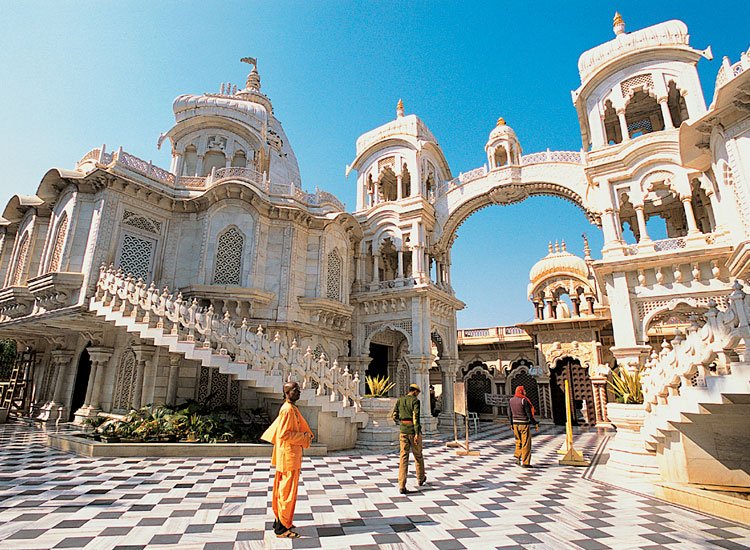
Walk into ISKCON Krishna Balaram Mandir during kirtan and something immediately stands out.
Look around.
You may see devotees from India, Europe, America, Africa, Russia, and many other parts of the globe chanting together.
The temple was established by A.C. Bhaktivedanta Swami Prabhupada, founder of the International Society for Krishna Consciousness. His work introduced Krishna bhakti and the teachings of the Gaudiya Vaishnava tradition to people across many countries.
The principal deities include Shri Krishna Balaram, with Shri Radha Shyamasundar and Shri Gaura Nitai worshipped within the temple complex.
Morning and evening kirtans can be deeply moving. Even someone unfamiliar with the tradition can sit quietly and listen.
The temple complex includes Prabhupada’s samadhi and other facilities used by pilgrims and devotees.
This is one place where Vrindavan’s ancient devotional tradition meets a remarkably international community.
4. Radha Raman Temple — Small Deity, Deep Devotion
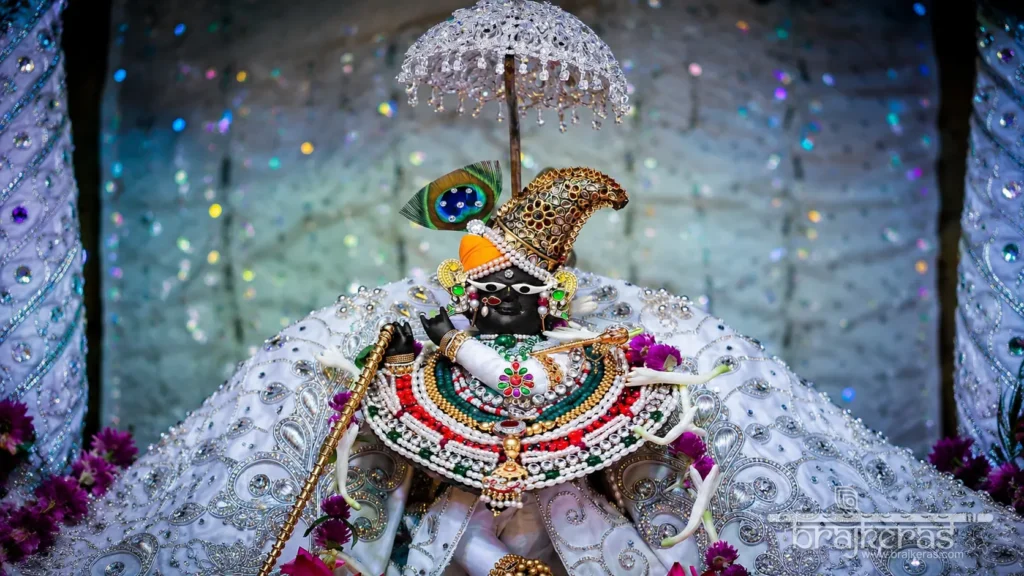
Radha Raman Temple feels quite different from the large modern temple complexes.
Shri Radha Raman Ji is associated with Gopal Bhatta Goswami, one of the Six Goswamis connected with Shri Chaitanya Mahaprabhu’s tradition in Vrindavan.
According to Gaudiya Vaishnava tradition, Radha Raman Ji manifested from a Shaligram Shila.
The deity is physically small, yet the darshan can hold your attention.
There’s a closeness here that’s difficult to describe without slipping into travel-writing clichés. The best thing may simply be to visit, stand quietly and observe the seva.
The temple’s worship tradition has continued through generations, making Radha Raman Temple one of the most respected historic temples in Vrindavan.
5. Radha Vallabh Temple — Where Shri Radha Takes Centre Stage
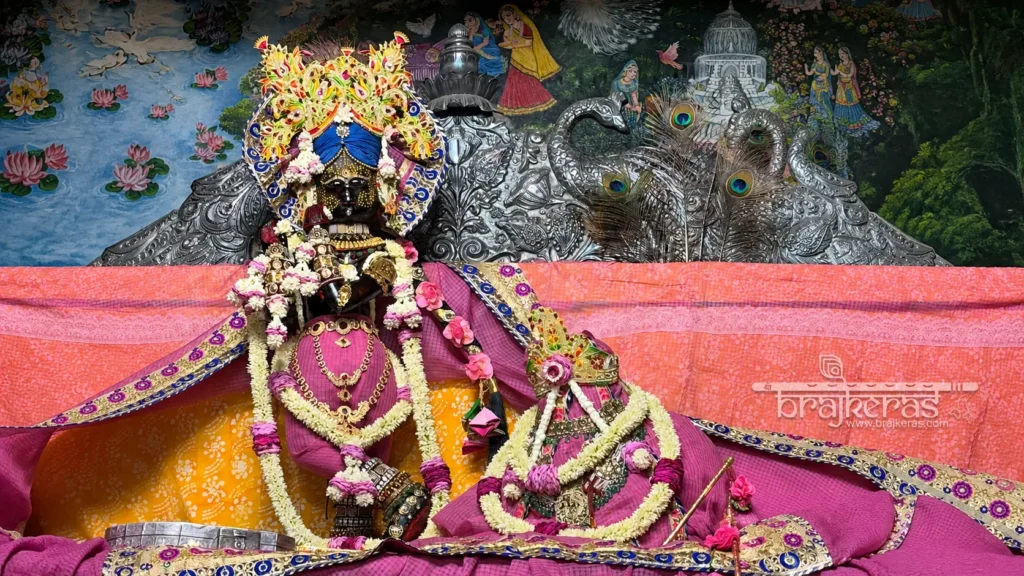
Vrindavan contains several Vaishnava traditions, each expressing devotion to Shri Radha Krishna in its own way.
The Radha Vallabh Temple is connected with the Radha Vallabh Sampradaya founded by Shri Hith Harivansh Mahaprabhu.
Shri Radha holds a particularly prominent position in this tradition.
Devotional singing forms a major part of temple worship, and the poetic tradition surrounding Radha Vallabh Ji gives the temple a character that feels different from nearby shrines.
This is one reason visiting several old Vrindavan temples is worthwhile.
At first glance, someone unfamiliar with Braj may think, “They’re all Krishna temples.”
Spend time here, and those differences begin to appear.
6. Radha Madan Mohan Temple — Old Vrindavan Still Standing
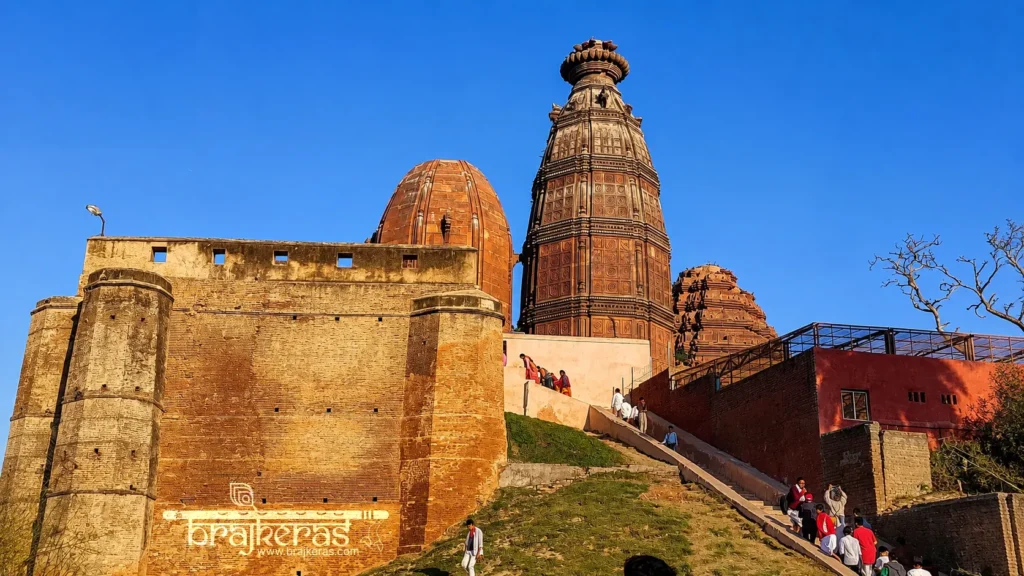
The historic Radha Madan Mohan Temple is closely associated with Sanatana Goswami, one of the Six Goswamis of Vrindavan.
Its tall red structure stands on elevated ground near the old Yamuna area and remains one of the most recognisable images of historic Vrindavan.
The original Madan Mohan deity was later moved to Rajasthan for protection during a period of political conflict.
The old temple still carries immense historical importance.
If Prem Mandir shows one face of modern Vrindavan, Madan Mohan gives you a glimpse of an older one—before wide roads, tour buses, and modern temple complexes changed the town’s physical character.
7. Seva Kunj — A Sacred Grove, Not a Tourist Park
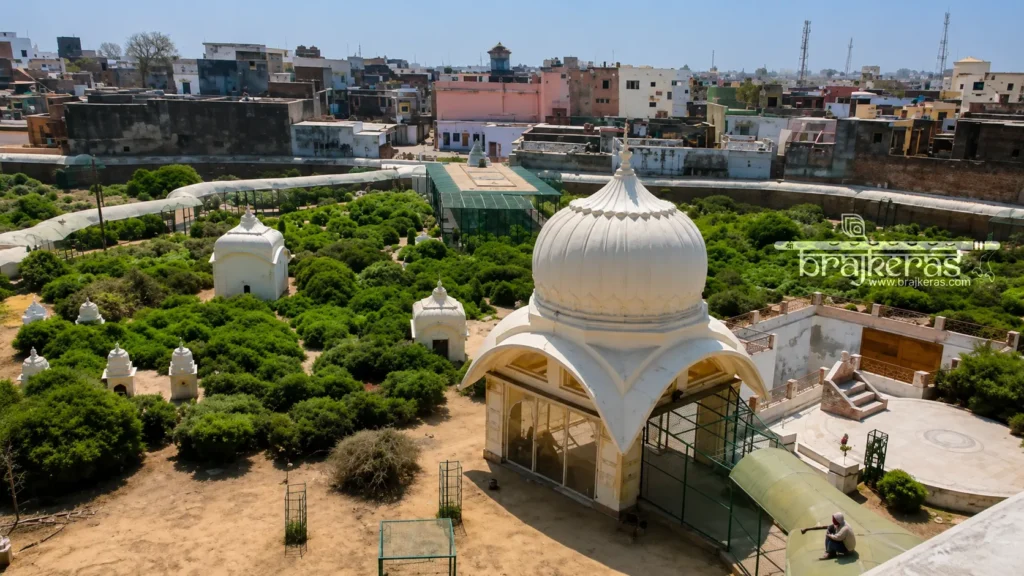
Now the mood changes.
Seva Kunj isn’t a conventional temple complex. It is a sacred grove associated in Braj tradition with the intimate leelas of Shri Radha and Krishna.
The area is particularly connected with Krishna serving Shri Radha and with Radha Krishna’s loving pastimes.
Visitors should approach Seva Kunj with the respect given to a leela-sthali, a place remembered in connection with divine pastimes.
That distinction is easy to miss if you arrive with a sightseeing mindset.
Vrindavan contains many such places. A grove may carry as much devotional importance as a grand temple.
Perhaps that’s one of the first lessons Braj quietly teaches.
8. Sri Rangji Temple — A Little South India in Vrindavan
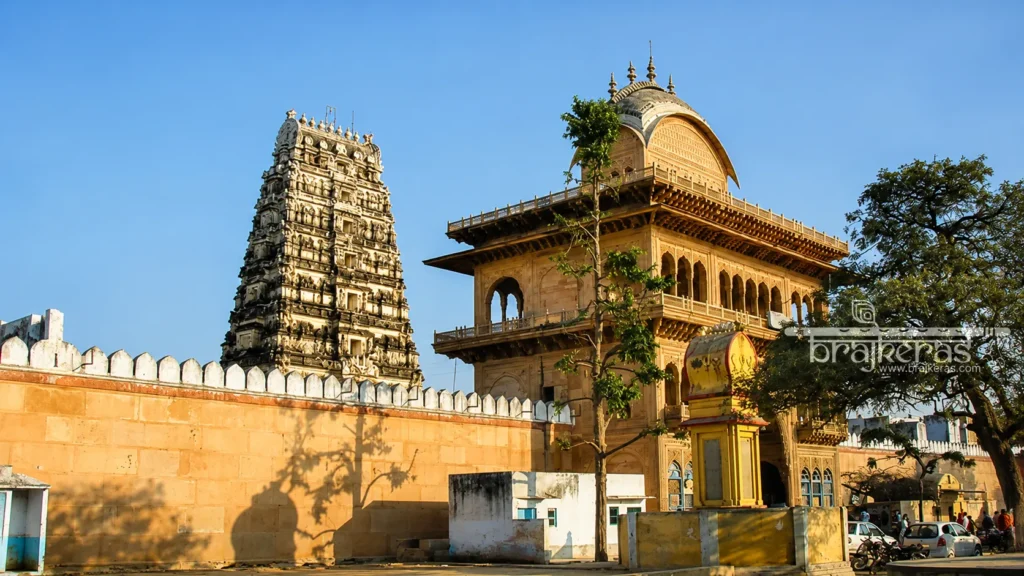
Walk around Vrindavan long enough, and Sri Rangji Temple may make you wonder for a second if you’ve somehow arrived in South India.
The architecture explains why.
The temple is dedicated to Lord Ranganatha, a reclining form of Lord Vishnu, and reflects the Sri Vaishnava tradition.
Its tall gateway, large courtyards and architectural details create a striking contrast with many North Indian temples nearby.
The temple is closely associated with Vrindavan’s diverse Vaishnava heritage. Krishna bhakti brought different traditions to the same sacred town, and each left its own architectural and devotional signature.
The annual Brahmotsav celebrations are particularly important here.
9. Pagal Baba Temple — The Tall White Landmark
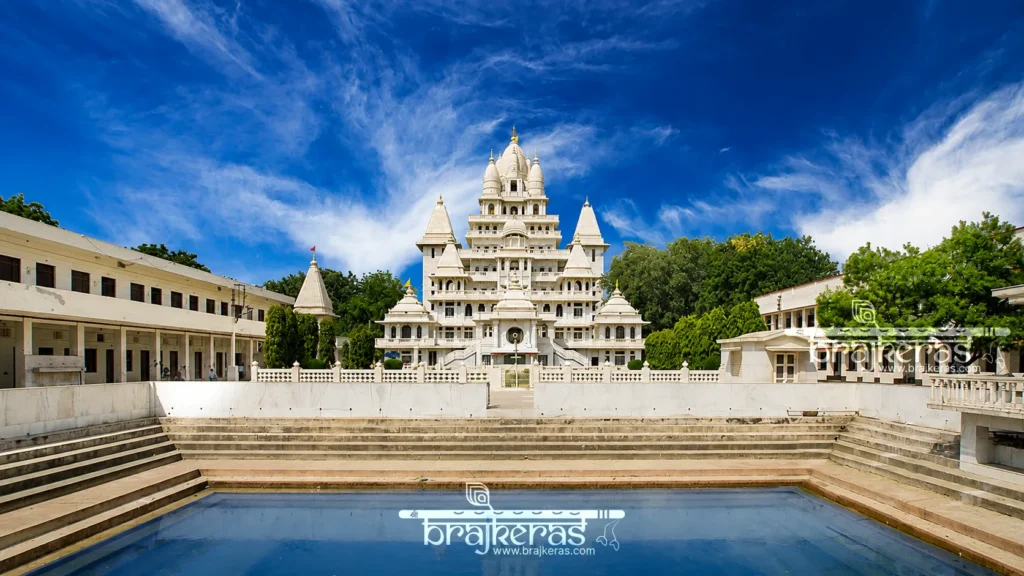
The multi-storeyed Pagal Baba Temple is easy to recognise.
Its tall white structure rises above the surrounding buildings and has become a familiar Vrindavan landmark.
Inside, different levels contain shrines and religious displays associated with stories from Hindu tradition.
The temple is often included in family itineraries since its architecture and multi-level layout provide a different experience from Vrindavan’s older temples.
It’s a relatively modern addition to the city, yet it has become part of the temple circuit followed by many pilgrims.
10. Gopinath Temple — Following the Goswamis of Vrindavan
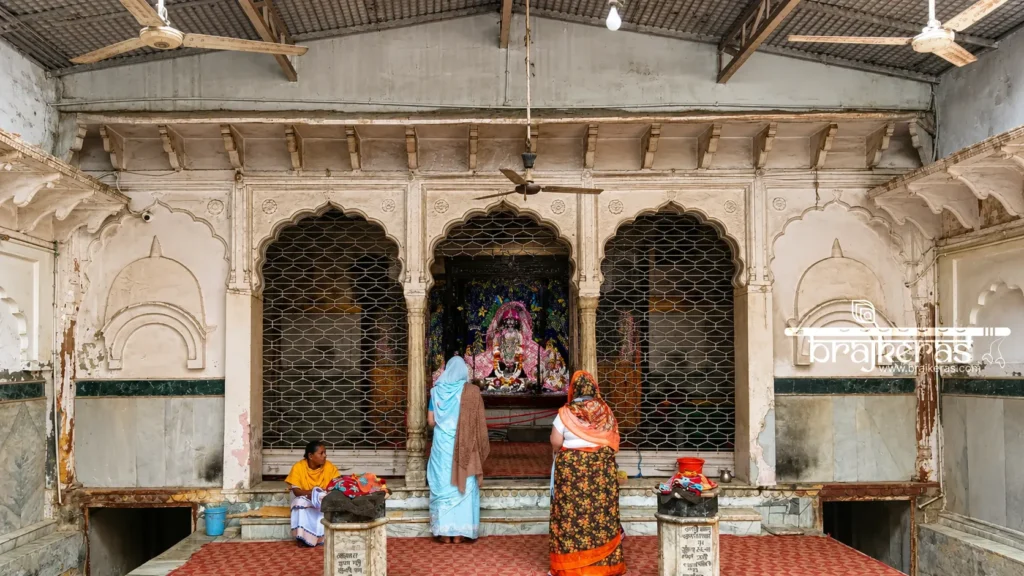
If you’re interested in the history of Gaudiya Vaishnavism, don’t rush past Gopinath Temple.
Shri Radha Gopinath belongs to the group of historic deities connected with the early followers of Shri Chaitanya Mahaprabhu in Vrindavan.
The temple is associated with Madhu Pandit, a disciple in the Gaudiya tradition.
Govind Dev, Madan Mohan and Gopinath are often remembered together within Vrindavan’s devotional history.
Visiting these temples adds context to what you’re seeing.
Vrindavan wasn’t built in one period. Saints, devotees, royal patrons, and different sampradayas shaped its temples across centuries.
Once you notice that, the old city begins to read almost like a living historical record.
11. Nidhivan — Where Faith Asks Curiosity to Stay Quiet
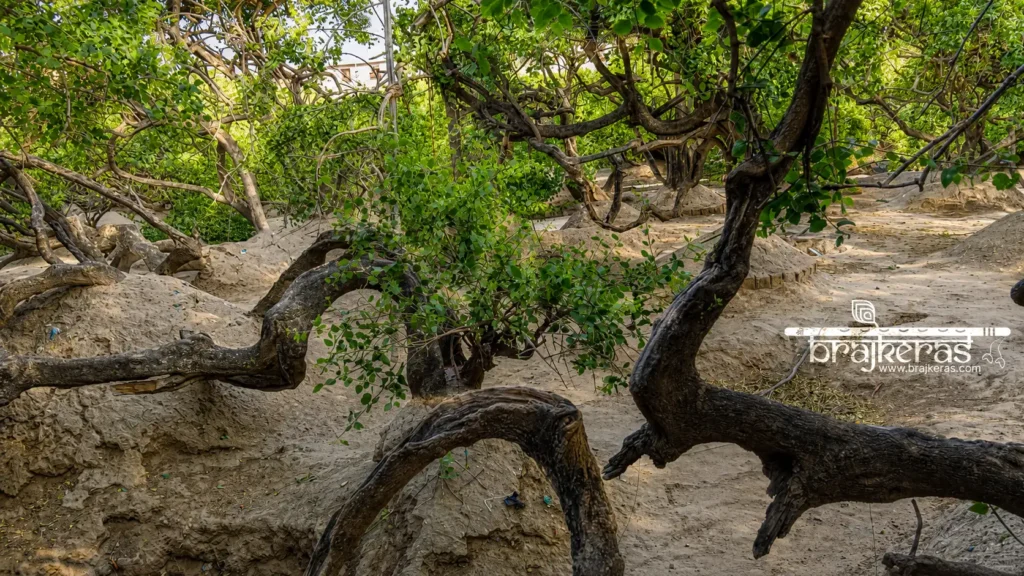
Few places in Vrindavan generate as much curiosity as Nidhivan.
The sacred grove is associated with Shri Radha Krishna’s Raas Leela, and strong local traditions surround the site.
You’ll hear stories that Radha and Krishna continue their divine pastimes here after nightfall. The area is closed in the evening, and many accounts have grown around what happens after visitors leave.
Naturally, that attracts curiosity.
But here’s the thing: reducing Nidhivan to a “mysterious place” misses what it means to devotees.
For Brajvasis and many Vaishnavas, Nidhivan is a sacred leela-sthali. The stories aren’t presented as spooky entertainment. They exist within a living devotional tradition.
Visit respectfully. Follow the local rules. Let the place be what it is.
Sometimes faith doesn’t need a camera pointed at every corner.
12. Shahji Temple — Marble Columns With a Twist
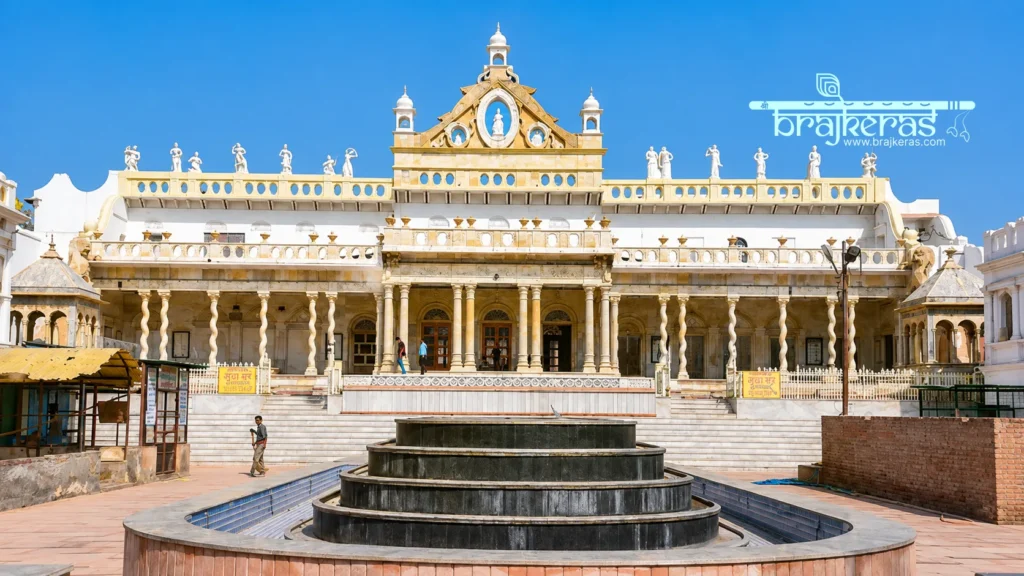
Shahji Temple gives architecture lovers another reason to slow down.
Built in the 19th century, the temple is known for its elaborate marble work and distinctive twisted columns.
Its decorative interiors feel quite different from the heavier red sandstone architecture seen at Govind Dev Ji or Madan Mohan.
The temple is dedicated to Shri Radha Krishna and is known for its special chamber, traditionally opened on selected occasions during the year.
If you’ve been walking through several temples in one day, Shahji Temple can catch you off guard.
Same Vrindavan. Completely different visual language.
13. Tatia Sthan – A Place of Silence and Deep Bhajan
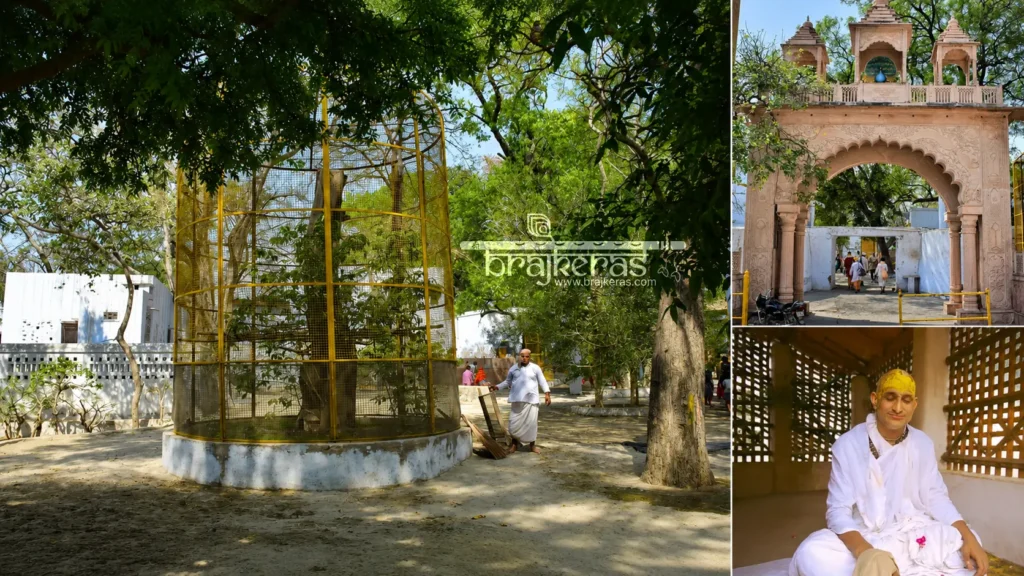
Hidden away from Vrindavan’s busy streets, Tatia Sthan carries a completely different atmosphere.
The ashram is closely associated with Swami Haridas Ji, the great saint whose devotion led to the manifestation of Shri Banke Bihari Ji. For centuries, saints have performed quiet bhajan and meditation here, preserving a tradition of simplicity and devotion.
One of the remarkable features of Tatia Sthan is its old tamal trees, many of which are covered with cloth. Devotees believe these trees hold special spiritual significance and treat the area with great reverence.
Unlike many popular temples, Tatia Sthan encourages silence. Visitors often spend time sitting peacefully rather than moving quickly from one shrine to another.
If you wish to experience a quieter side of Vrindavan, Tatia Sthan is worth including in your visit.
14. Devaraha Baba Seva Ashram – Remembering a Great Saint
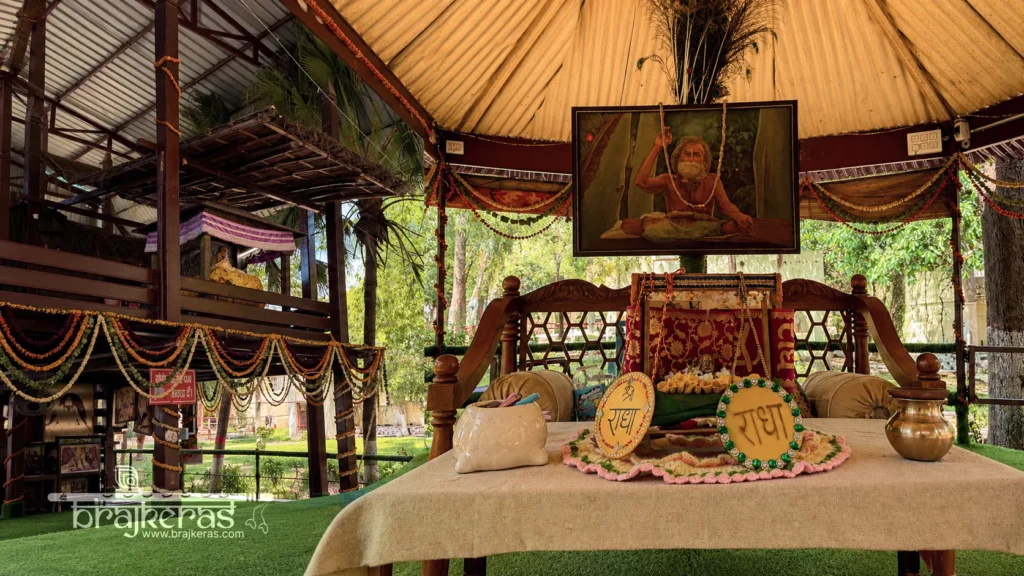
Devaraha Baba Seva Ashram is dedicated to the memory of Yogiraj Devaraha Baba, one of India’s most respected saints of the twentieth century.
Devaraha Baba was known for his simple lifestyle, deep spiritual wisdom, and blessings offered to devotees from every walk of life. Many national leaders, saints, and ordinary pilgrims visited him to seek guidance.
The ashram provides a peaceful environment for prayer, meditation, and satsang. Compared with Vrindavan’s larger temples, it receives fewer casual visitors, making it a pleasant place for those looking for a little quiet during their pilgrimage.
Many devotees stop here to remember Devaraha Baba’s teachings of humility, devotion, and service.
15. Neem Karoli Baba Ashram – A Place Loved Around the World
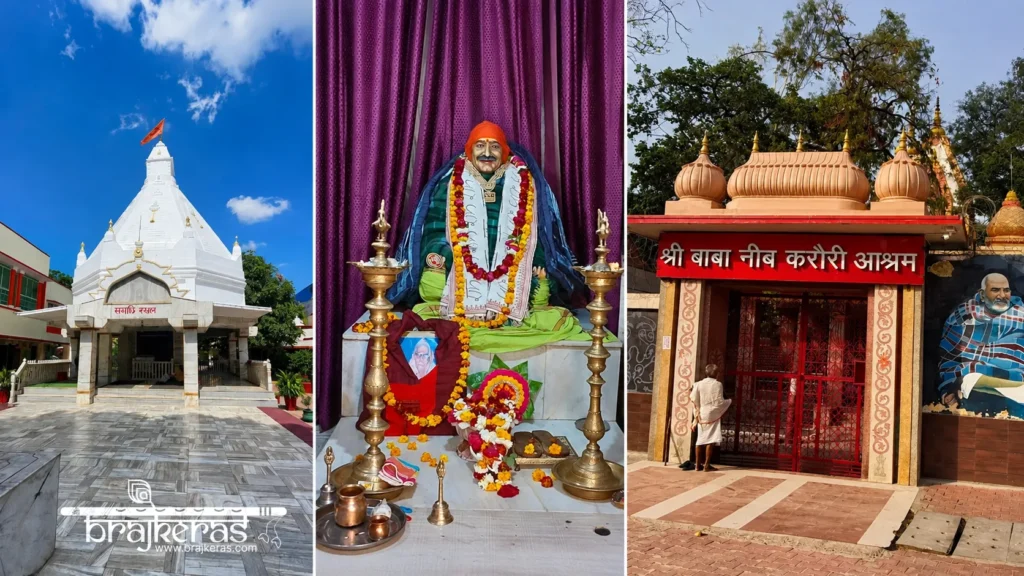
The Neem Karoli Baba Ashram in Vrindavan is one of the town’s most visited spiritual centres.
Neem Karoli Baba, lovingly known as Maharaj Ji, inspired countless devotees through his message of love, service and constant remembrance of God. His teachings continue to attract people from India and abroad.
The ashram has gained international recognition over the years, with many well-known spiritual seekers, authors and entrepreneurs speaking about Maharaj Ji’s influence on their lives.
Despite its popularity, the atmosphere remains calm and welcoming. Visitors often spend time in prayer, meditation or simply sitting quietly within the peaceful surroundings.
The ashram is especially busy on Maharaj Ji’s appearance and disappearance days, when devotees gather from many parts of the country.
16. Keli Kunj – A Sacred Place of Divine Pastimes
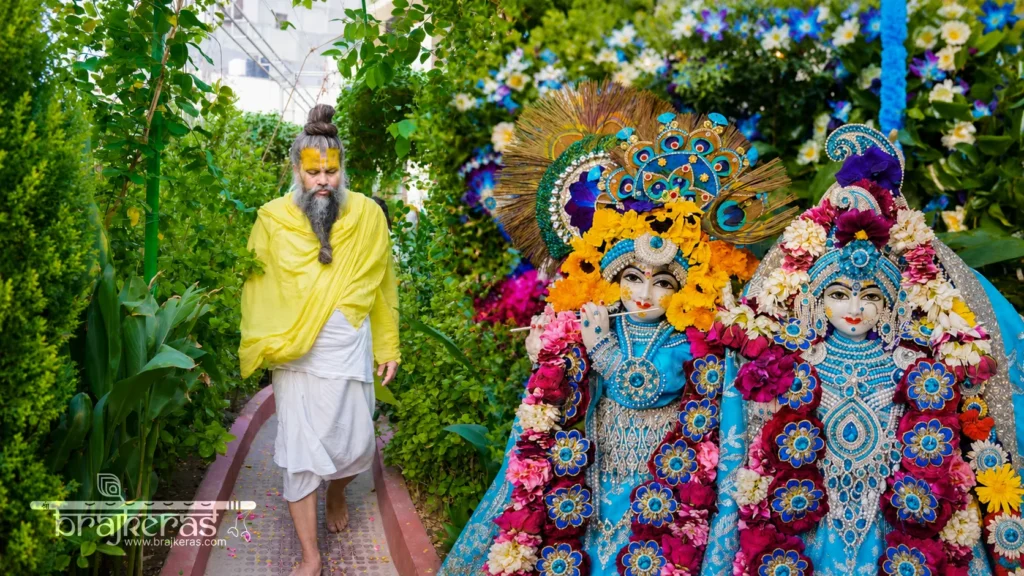
Located near Keshi Ghat, Keli Kunj is one of Vrindavan’s cherished leela-sthalis.
The word Keli refers to the loving pastimes of Shri Radha and Shri Krishna, and Braj tradition remembers this area as one of the places connected with those divine sports.
The temple complex offers beautiful darshan of Shri Radha Krishna and provides a peaceful setting close to the banks of Shri Yamuna Maharani.
Many devotees include Keli Kunj while visiting nearby sacred places such as Keshi Ghat, Seva Kunj, Nidhivan and Banke Bihari Temple.
The atmosphere here is noticeably calmer than some of Vrindavan’s busiest temples, making it an ideal place to pause, chant the holy names, and spend a few quiet moments in remembrance of Shri Radha Krishna.
17. Char Dham Temple Vrindavan – Four Sacred Dhams in One Place
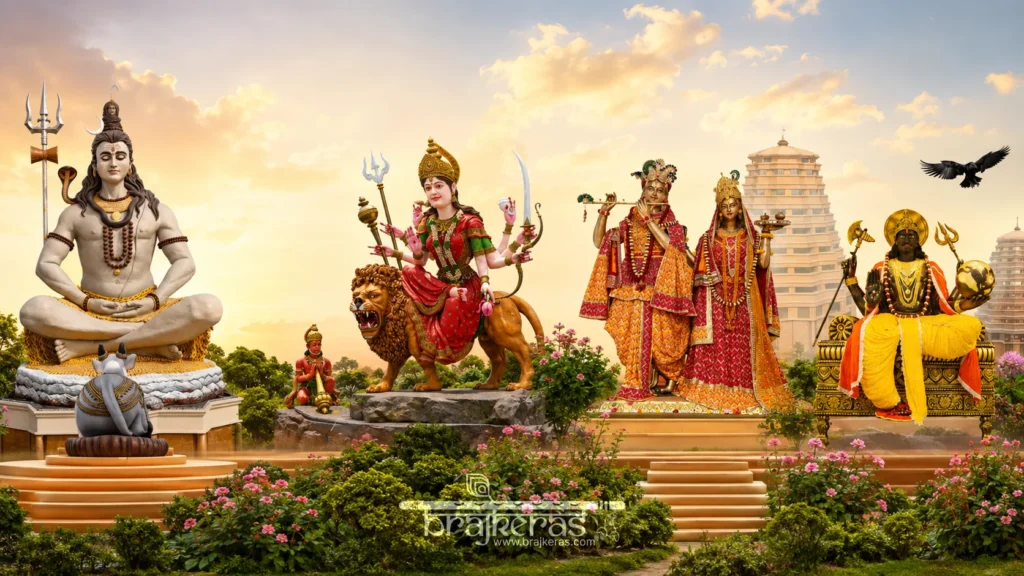
Not every pilgrim has the opportunity to travel across India to visit Badrinath, Dwarka, Jagannath Puri and Rameswaram. The Char Dham Temple in Vrindavan was created with that thought in mind, allowing devotees to pay their respects to the four sacred dhams at one place.
The temple complex is spread over a large area and features beautifully crafted shrines dedicated to several Hindu deities. One of its biggest attractions is the towering statue of Lord Shiva seated in meditation, visible from a distance. Nearby stands a magnificent statue of Maa Durga riding a lion, while beautifully decorated shrines of Shri Radha Krishna, Shani Dev, Hanuman Ji, and other deities welcome devotees throughout the complex.
Walking through the temple feels like moving through a spiritual park. Landscaped gardens, devotional music, and wide pathways create a peaceful atmosphere that encourages visitors to spend time rather than rush through the darshan.
The temple becomes especially lively during Navratri, Janmashtami, Mahashivaratri and other major Hindu festivals. Decorative lighting, devotional programmes and special pujas attract thousands of devotees from across the country.
Families particularly enjoy visiting Char Dham Temple because of its spacious layout, clean surroundings and large open areas. Unlike the narrow lanes of old Vrindavan, the complex offers plenty of room to walk comfortably and appreciate the beautifully designed shrines.
If you’re visiting Vrindavan for the first time, Char Dham Temple offers an opportunity to experience many important forms of Hindu worship in a single visit. It beautifully combines devotion, architecture, and peaceful surroundings, making it one of the city’s most popular modern pilgrimage destinations.
Highlights
- Symbolic representation of India’s four sacred dhams
- Massive meditation statue of Lord Shiva
- Grand statue of Maa Durga seated on a lion
- Beautiful shrines of Shri Radha Krishna, Shani Dev, Hanuman Ji and other deities
- Landscaped gardens and spacious walking paths
- Popular destination during Navratri, Janmashtami and Mahashivaratri
- Family-friendly temple complex with a peaceful atmosphere
18. Gopeshwar Mahadev Temple, Vrindavan – Where Mahadev Came to Witness Radha-Krishna’s Raas
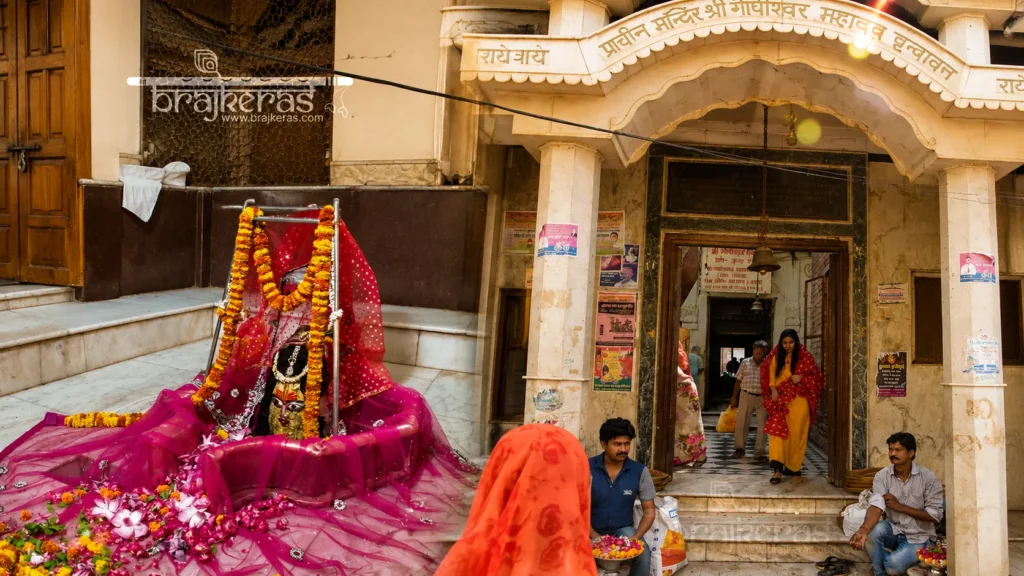
A visit to Vrindavan feels a little different when you stand before Gopeshwar Mahadev. This ancient Shiva temple is deeply connected with the divine Raas Leela of Shri Radha and Krishna and holds a special place in the traditions of Braj.
According to Braj tradition, Lord Shiva wished to witness the sacred Raas Leela of Shri Krishna and the gopis. But there was one condition: only the gopis could enter the Raas Mandal. Mahadev then took the form of a gopi, allowing him to enter and receive the darshan of this divine pastime. From this beautiful tradition came the name Gopeshwar — the Lord who became a gopi.
This is why devotees often offer prayers to Gopeshwar Mahadev before visiting the deeper sacred places of Vrindavan. There’s a simple feeling behind it: Mahadev himself came to Vrindavan to receive the grace of Radha and Krishna.
The temple is located near Vamshi Vat and the Yamuna, in an area closely associated with Krishna’s pastimes. The present temple is modest compared with some of Vrindavan’s grander shrines, but its spiritual importance is immense.
Why Gopeshwar Mahadev Is Important in Vrindavan
There is a popular saying among devotees that a Vrindavan pilgrimage feels incomplete without seeking the blessings of Gopeshwar Mahadev. It isn’t a rule or a formal requirement; rather, it’s a devotional tradition passed from one generation to another.
And there’s something rather beautiful about that tradition. Vrindavan is known primarily as the land of Radha and Krishna, yet one of the most revered guardians of this sacred land is Mahadev himself.
During Kartik month, Mahashivratri and other important festivals, the temple receives many devotees. The form of Gopeshwar Mahadev is especially revered in the evening, when devotees gather for darshan and prayer.
If you’re making a list of places to visit in Vrindavan, don’t treat Gopeshwar Mahadev as a quick stop between two famous temples. Sit for a few minutes. Offer your prayers. Remember the story of Mahadev becoming a gopi just to witness the love of Radha and Krishna.
For many devotees, that’s what makes a Vrindavan visit feel complete.
Which Temples Should You Visit First in Vrindavan?
Trying to visit all 15 places in a few hours isn’t a great idea.
Yes, technically you could race around in an e-rickshaw, check Google Maps every six minutes and collect temple photos like stamps.
But why?
If you have only one day, focus on a smaller group. Banke Bihari Temple, Radha Raman Temple, ISKCON Krishna Balaram Mandir, Prem Mandir and one or two old temples can give you a good introduction.
Have two or three days? Spend some time in old Vrindavan.
Visit Govind Dev Ji, Madan Mohan, Radha Vallabh and Gopinath. Walk around Seva Kunj. Visit Nidhivan with the right attitude. Spend an evening near Shri Yamuna Ji.
Vrindavan pilgrimage feels incomplete without seeking the blessings of Gopeshwar Mahadev Temple.
Temple opening times change according to season, festivals and daily seva schedules, so check current darshan timings before leaving your hotel or ashram.
Holi and Janmashtami bring extraordinary celebrations—and extraordinary crowds. Kartik has a devotional character of its own. Summer afternoons can be harsh, so early morning and evening visits often feel easier.
Comfortable footwear helps too, though you’ll remove it repeatedly at temples. Keep water with you, dress respectfully, and watch your belongings around monkeys.
A final tip?
Don’t schedule every minute.
Vrindavan Makes More Sense When You Stop Rushing
There’s a strange contradiction in visiting Vrindavan.
You arrive with a list.
Banke Bihari? Check.
Prem Mandir? Check.
ISKCON? Check.
Nidhivan? Check.
Yet the moments you remember may have nothing to do with that list.
Maybe an elderly Brajvasi says “Radhe Radhe” as you pass.
Maybe you hear kirtan from a temple you never planned to enter.
Maybe you sit beside Shri Yamuna Ji longer than expected.
Or perhaps you get three seconds of Banke Bihari Ji’s darshan before the curtain closes—and those three seconds somehow feel enough.
Vrindavan has changed greatly over the years. Roads are busier. New buildings have appeared. Pilgrim numbers have grown. E-rickshaws squeeze through places where the old galis already seemed too narrow.
Yet beneath all that movement sits an older Vrindavan—the Vrindavan remembered through Shri Radha, Shri Krishna, the gopis, the Goswamis, saints and generations of devotees.
You don’t need to see every temple to experience it.
Walk a little slower. Listen to the kirtan. Respect the leela-sthalis. Spend time rather than counting places.
And if someone smiles at you in a narrow gali and says, “Radhe Radhe,” you already know what to say back.
Radhe Radhe.