Planning Govardhan Parikrama? It is a sacred 21 km pilgrimage around Govardhan Hill. Walk where Krishna walked. Learn its history, holy sites, spiritual meaning, route, and practical travel tips.
Table of Contents
If someone asks what makes Braj different from every other pilgrimage place in India, many devotees smile and give a simple answer—Govardhan Parikrama.
At first glance, it seems like a walk around a small hill. About 21 kilometers. A few hours on foot. Dusty roads, temple bells, monkeys, cows, and thousands of pilgrims chanting “Radhe Radhe.“
Yet anyone who has completed the parikrama knows something changes along the way.
People don’t come here merely for exercise or sightseeing. They come with prayers, gratitude, questions, and sometimes even broken hearts. Somewhere between the first step and the last, many feel lighter. It’s difficult to explain. That’s probably why devotees return again and again.
Govardhan Hill is not treated as an ordinary mountain. In Braj, it is worshipped as the living form of Lord Krishna Himself. Every stone is offered respect. Every grain of dust is considered sacred.
Let’s walk through its story, its significance, and everything you should know before performing Govardhan Parvat Parikrama.
Govardhan Parvat: The Hill That Krishna Never Left
Govardhan Parvat lies in the Mathura district of Uttar Pradesh, around 25 kilometers from Vrindavan.
Today, the hill appears much smaller than many people expect. Ancient scriptures describe Govardhan as enormous, stretching high into the sky. According to Vaishnava tradition, the hill gradually reduces in size with every passing age of Kali Yuga.
That idea surprises first-time visitors.
“Is this really the famous Govardhan?”
Yes.
For devotees, physical height has never measured Govardhan’s greatness. Its spiritual glory remains untouched.
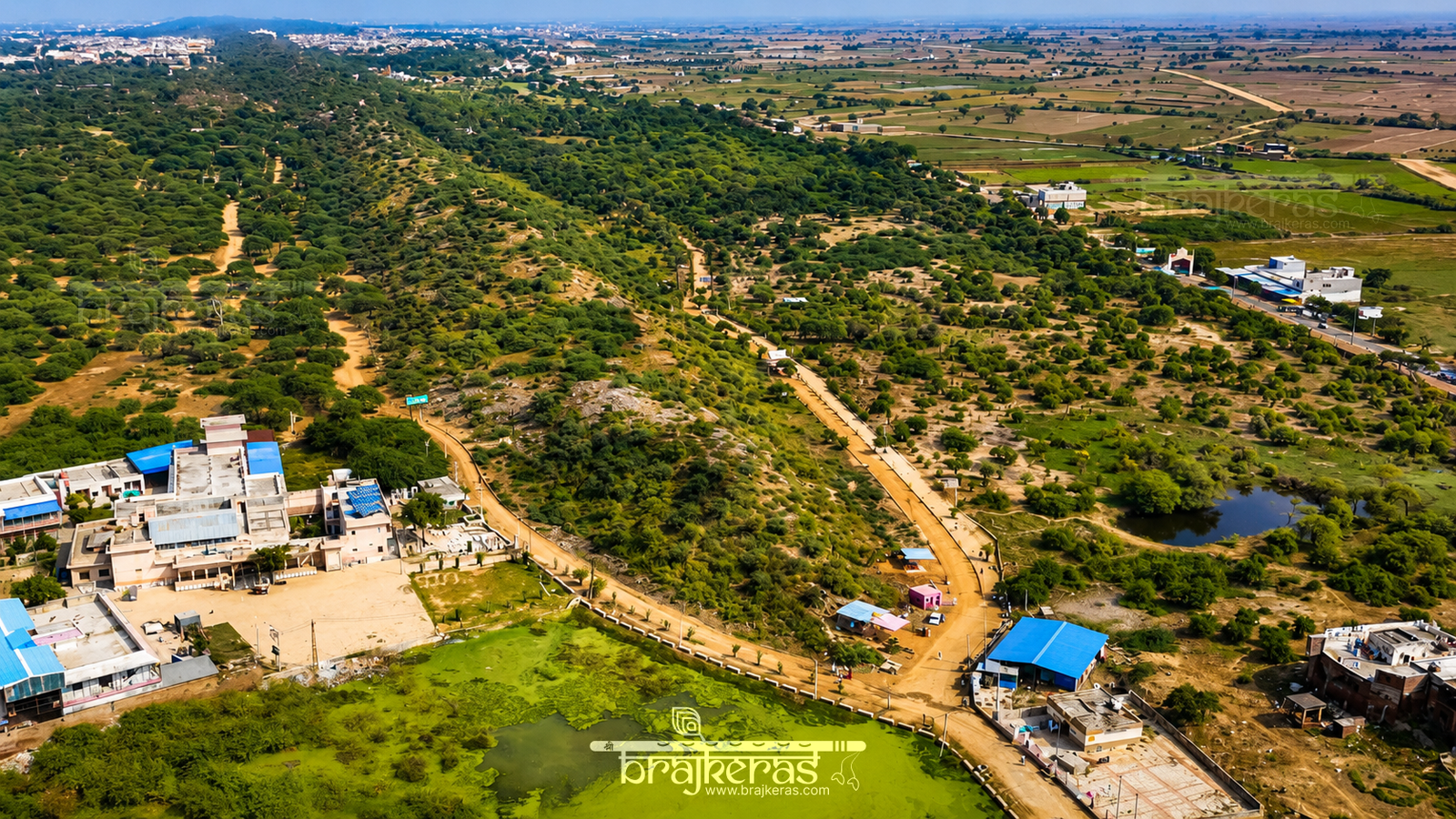
The entire hill extends across several villages, including Govardhan, Jatipura, Anyor, Poonchari, and Radha Kund. The complete circumambulation covers roughly 21 kilometers.
The Beautiful Story Behind Govardhan Hill
Every child growing up with Krishna’s stories has heard this famous pastime.
The people of Braj prepared a grand offering for Lord Indra every year, believing he controlled the rains.
Young Krishna questioned the tradition.
He lovingly suggested that the villagers worship Govardhan Hill instead, because the hill gave them everything they truly needed—grass for their cows, fresh water, trees, fruit, caves, herbs, and fertile land.
The villagers trusted Krishna.
Indra became furious.
Dark clouds covered Braj. Heavy rain poured without stopping. Strong winds frightened everyone.
Then came one of the most celebrated moments in Hindu tradition.
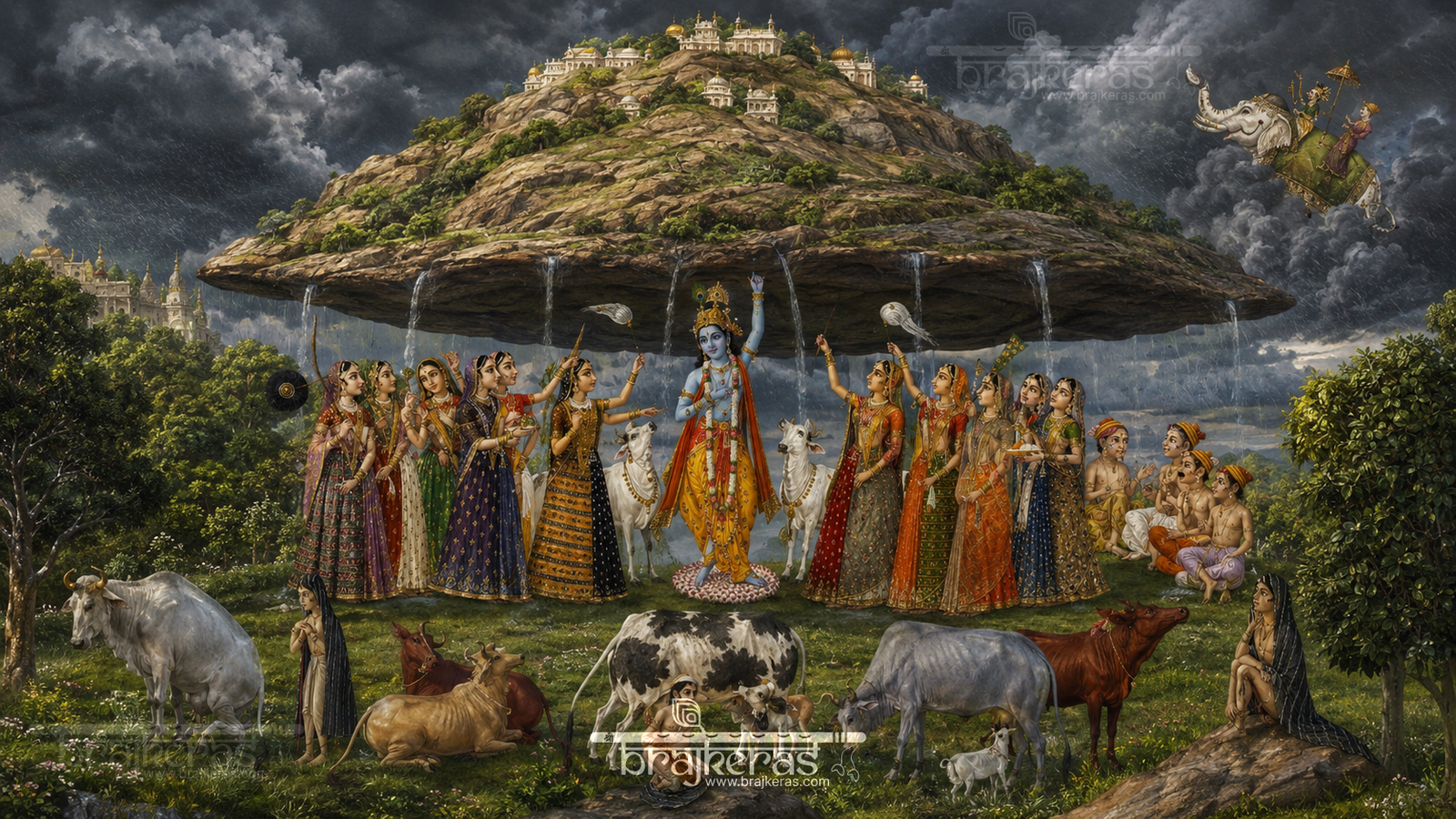
Krishna lifted Govardhan Hill with the little finger of His left hand and held it like a giant umbrella for seven days. Every resident of Braj, along with countless cows, found shelter beneath the mountain.
Indra finally realized Krishna’s divine nature and asked for forgiveness.
Since that day, Govardhan has been honored as Krishna’s closest servant and His own sacred form.
Every Govardhan Parikrama remembers this eternal pastime.
Why Do Devotees Perform Govardhan Parikrama?
This question comes up often.
People walk for different reasons.
Some pray for peace.
Some come after fulfilling a wish.
Others walk simply because generations before them did the same.
Scriptures describe Govardhan as Haridas Varya—the greatest servant of Lord Krishna. By walking around Govardhan with devotion, pilgrims express gratitude and humility before Krishna.
Many devotees believe the parikrama helps remove pride, calm the mind, and deepen one’s relationship with God.
Interestingly, very few people rush.
Even young visitors naturally slow their pace. The atmosphere itself encourages patience.
Perhaps that’s one of Govardhan’s quiet lessons.
Choti (Small) Parikrama and Badi (Full) Parikrama
| Parikrama type | Distance | Best for |
| Full parikrama | 21 km | Traditional pilgrims |
| Badi parikrama | 12 km | Outer route coverage |
| Chhoti parikrama | 9 km | Radha Kund focus, shorter visits |
| Dandavat parikrama | Variable | Intense devotional practice |
Choti Parikrama 9 km
Choti Parikrama is a shorter route around Govardhan Hill. It usually covers about 9 km and is a good option for elderly devotees, families, or anyone who can’t walk the full 21 km.
Many pilgrims do Choti Parikrama around Radha Kund and Shyam Kund, offering prayers at the sacred places along the way.
Badi Parikrama 12 km
Badi Parikrama is the full Govardhan Parikrama, covering around 12 km around Govardhan Hill. It passes through important places such as Daan Ghati, Jatipura, Kusum Sarovar, Radha Kund, Shyam Kund, and Mansi Ganga.
Most people complete it in 6–8 hours, but you can take breaks or split it over 2–3 days if needed. If walking the full route isn’t possible, e-rickshaws are another option.
Different Types of Govardhan Parvat Parikrama
There isn’t just one way to perform Govardhan Parikrama. Devotees follow different forms of parikrama based on their faith, ability, and personal practice.
Some take a few hours. Others may take days, months, or even years. Each form reflects a deep sense of devotion.
Walking Parikrama
Walking Parikrama is the most common way to go around Govardhan Parvat.
You walk clockwise with Govardhan Hill on your right and continue until you return to your starting point.
The full route is around 21 km. Most people take about 6–8 hours, depending on their walking speed and the number of breaks they take.
For many pilgrims, the walk itself becomes a peaceful time for chanting, prayer, and reflection.
Doodh Parikrama
In Doodh Parikrama, devotees carry a pot filled with milk while going around Govardhan.
The milk is offered continuously during the parikrama. Some devotees make a small hole in the pot so that a thin stream of milk keeps flowing as they walk.
You’ll often see these lines of milk along the parikrama path. For devotees, it’s an act of love and offering to Govardhan Maharaj.
Sohni Seva Parikrama
Sohni Seva Parikrama is performed with a broom.
Devotees clean the path as they walk around Govardhan. The idea is beautifully simple—serve Govardhan by keeping the path clean.
Think about it for a moment. Thousands of people walk this sacred route every day, yet some devotees choose to spend their parikrama cleaning it for others.
It’s a quiet form of seva that says a lot without saying anything.
Dandvat Parikrama
Dandvat Parikrama is one of the most physically demanding forms of parikrama.
The devotee lies flat on the ground, touching the earth with the hands, feet, knees, chest, and forehead. After getting up, the person marks the point reached by the hands. The next Dandvat starts from that point.
Then the same process is repeated.
Again and again.
It can take around 8–10 days for regular practitioners to complete the full parikrama. Many divide the route into smaller sections and continue their practice each day.
The physical effort is great, but for the devotee, every Dandvat is an offering of humility and devotion.
Couple Dandvat Parikrama
Some married couples perform Dandvat Parikrama together.
The husband and wife take turns doing each Dandvat. One person begins, and the other continues from the point reached by their partner.
This shared practice allows the couple to complete the parikrama with less physical strain while remaining together in devotion.
Watching a couple perform this seva can be deeply touching. One person moves forward, then the other follows. Step by step, they support each other around Govardhan.
108 Dandvat Parikrama
This form of parikrama is truly remarkable.
A devotee carries 108 small stones and performs 108 Dandvats at one place before moving ahead.
After completing the 108 Dandvats, the stones are moved to the next point, and the practice begins again.
You may see piles of stones along the Govardhan Parikrama path. Many of them mark places where sadhus and devotees perform this demanding practice.
The progress is very slow—sometimes only a few meters in a day.
For some devotees, completing one full Govardhan Parikrama in this way can take months or even years.
Standing beside the path and watching this practice can leave you speechless. It makes you wonder: how much faith does it take to keep going for so long?
For these devotees, Govardhan Parikrama isn’t about reaching the finish line quickly.
Every Dandvat is itself a prayer.
There isn’t Just One Way to Perform Parikrama
Most visitors complete the 21-kilometer walking parikrama, which usually takes five to seven hours depending on stops along the route.
Many devotees perform:
- Barefoot Parikrama
- Dandavat Parikrama, where each full-body prostration marks the next step
- Sashtang Parikrama over several weeks or months
- Daily shorter parikramas around Radha Kund
- Govardhan Parikrama during Guru Purnima, Kartik month, or Govardhan Puja
The Dandavat Parikrama deserves special mention.
Watching someone complete it is deeply moving. Every few feet, the devotee lies flat on the ground, stands up, marks the next point, and repeats the process. Completing the entire route can take several months.
It reminds us that devotion isn’t measured by speed.
Walking the Sacred Route
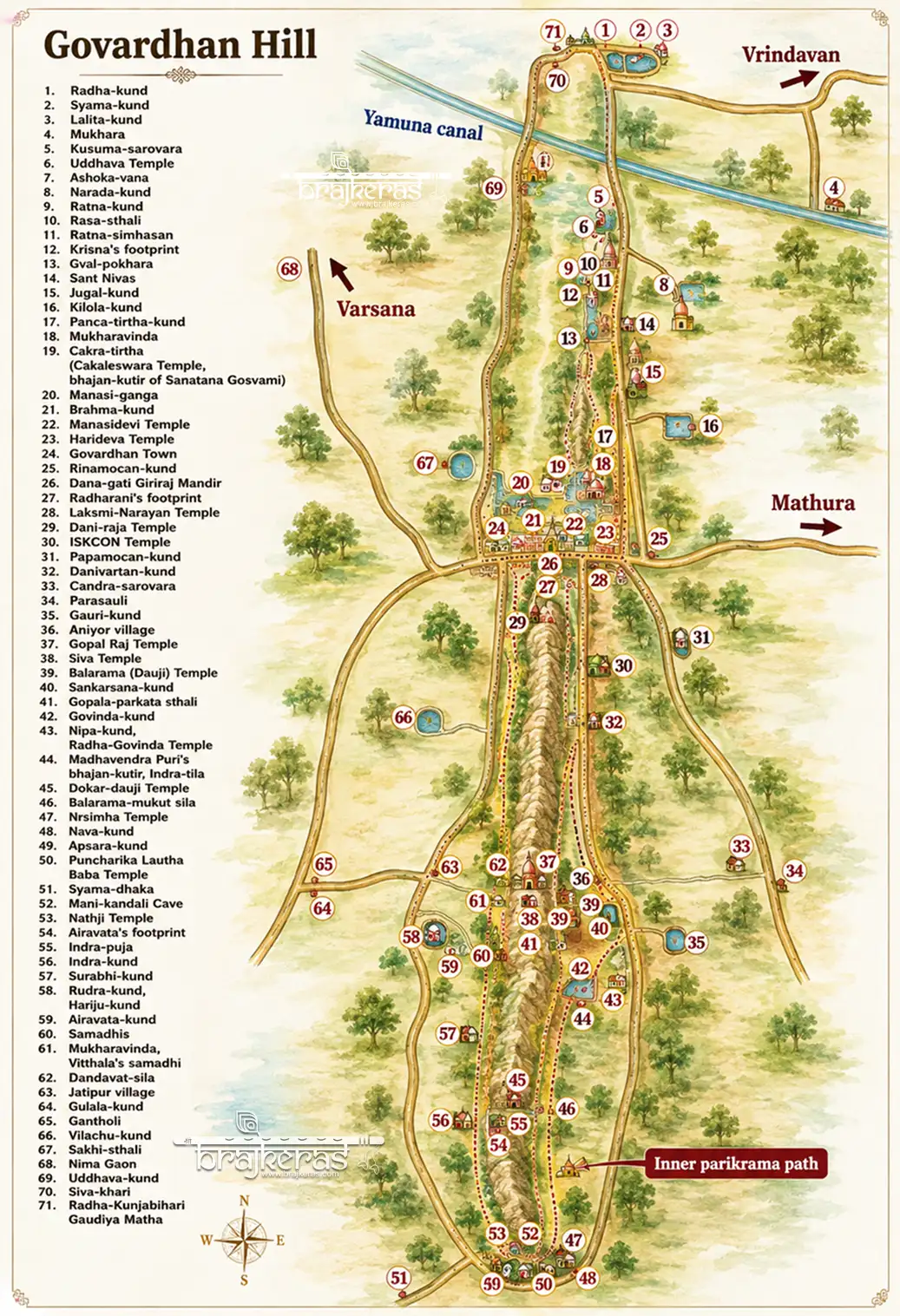
Most pilgrims begin near Daan Ghati Temple, one of Govardhan’s busiest spiritual centers.
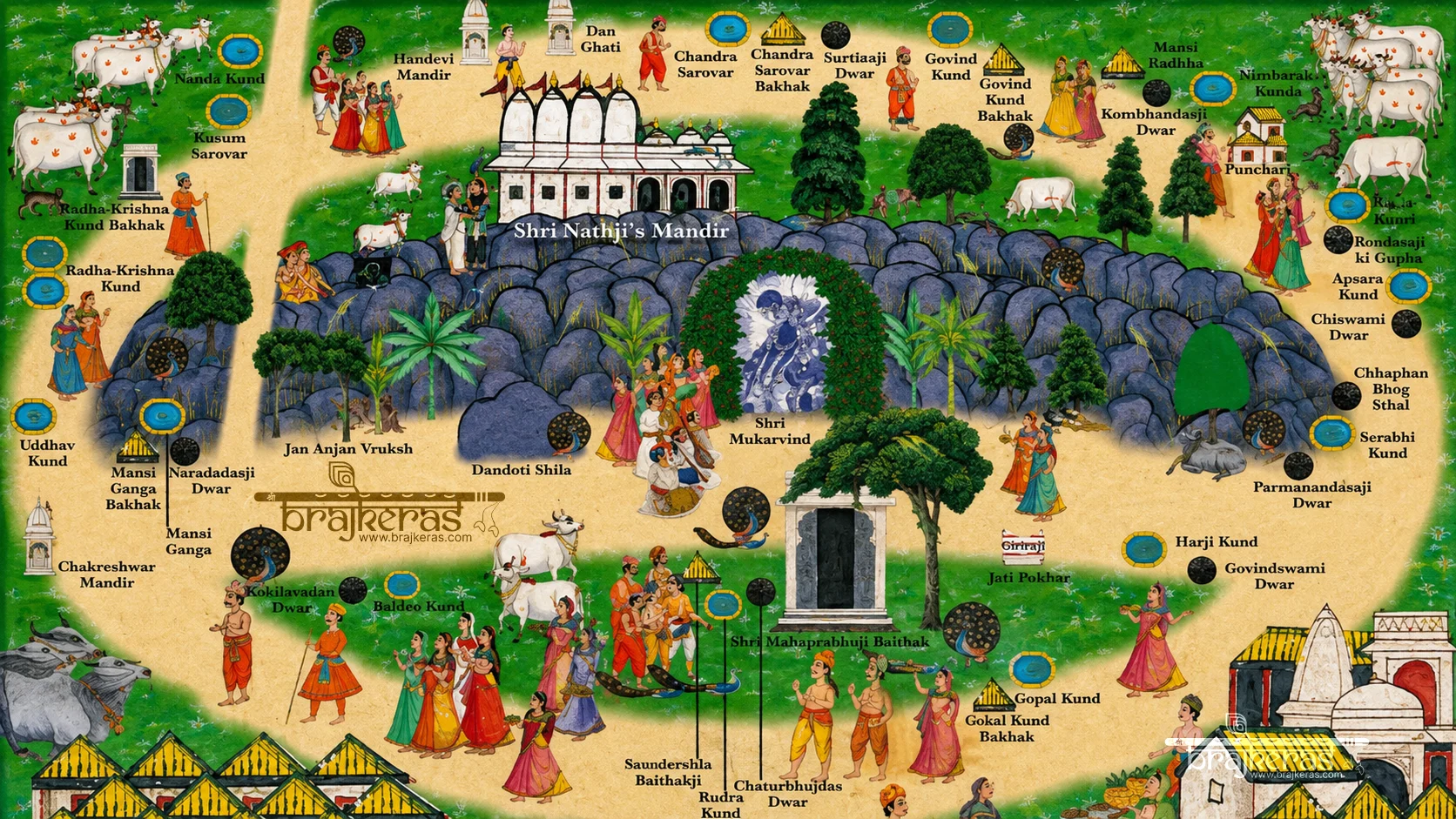
The traditional route passes through several sacred places:
- Daan Ghati Mandir
- Laxmi Narayan Temple
- Mansi Ganga
- Thakur Hari Dev Ji Mandir
- Brahma Kund
- Chakreshwar Mahadev Temple
- Kunds Around Govardhan Hill – Govardhan Parvat Parikrama
- Sankarshan Kund
- Radha Kund & Shyam Kund
- Kusum Sarovar
- Chandra Sarovar
Many pilgrims finish exactly where they began, completing the full circle.
Along the way, you’ll hear constant chanting.
“Radhe Radhe.”
Sometimes strangers greet one another with these two simple words. Nobody asks where you’re from. For those few hours, everyone shares the same path.
Sacred Places You Shouldn’t Miss
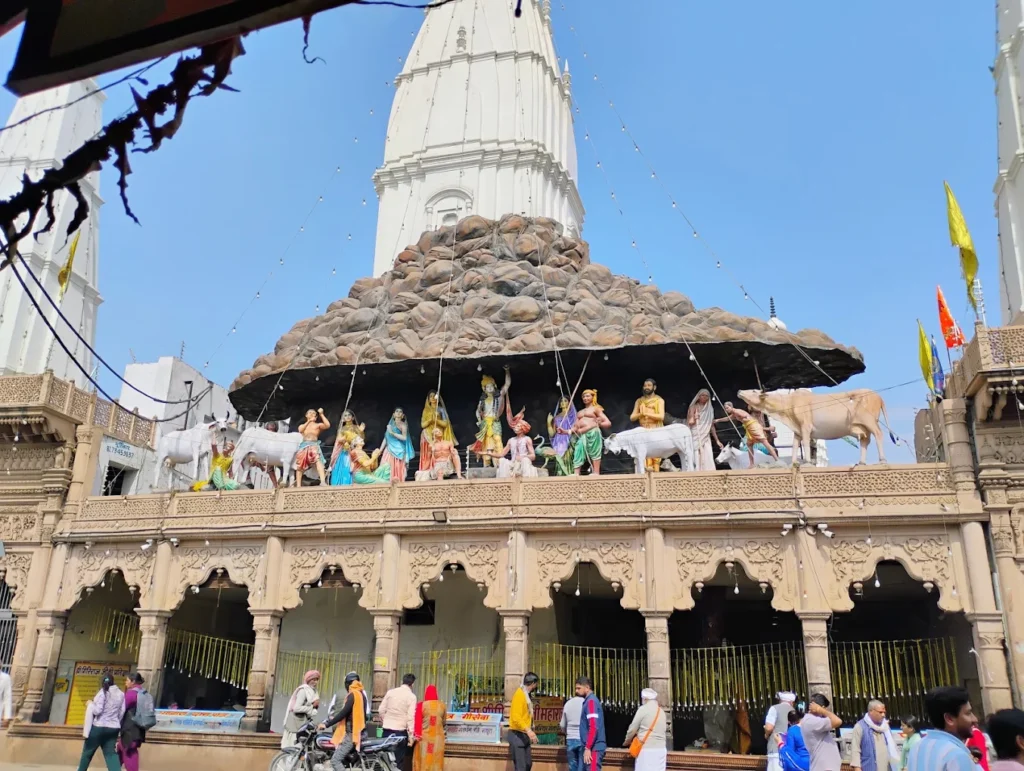
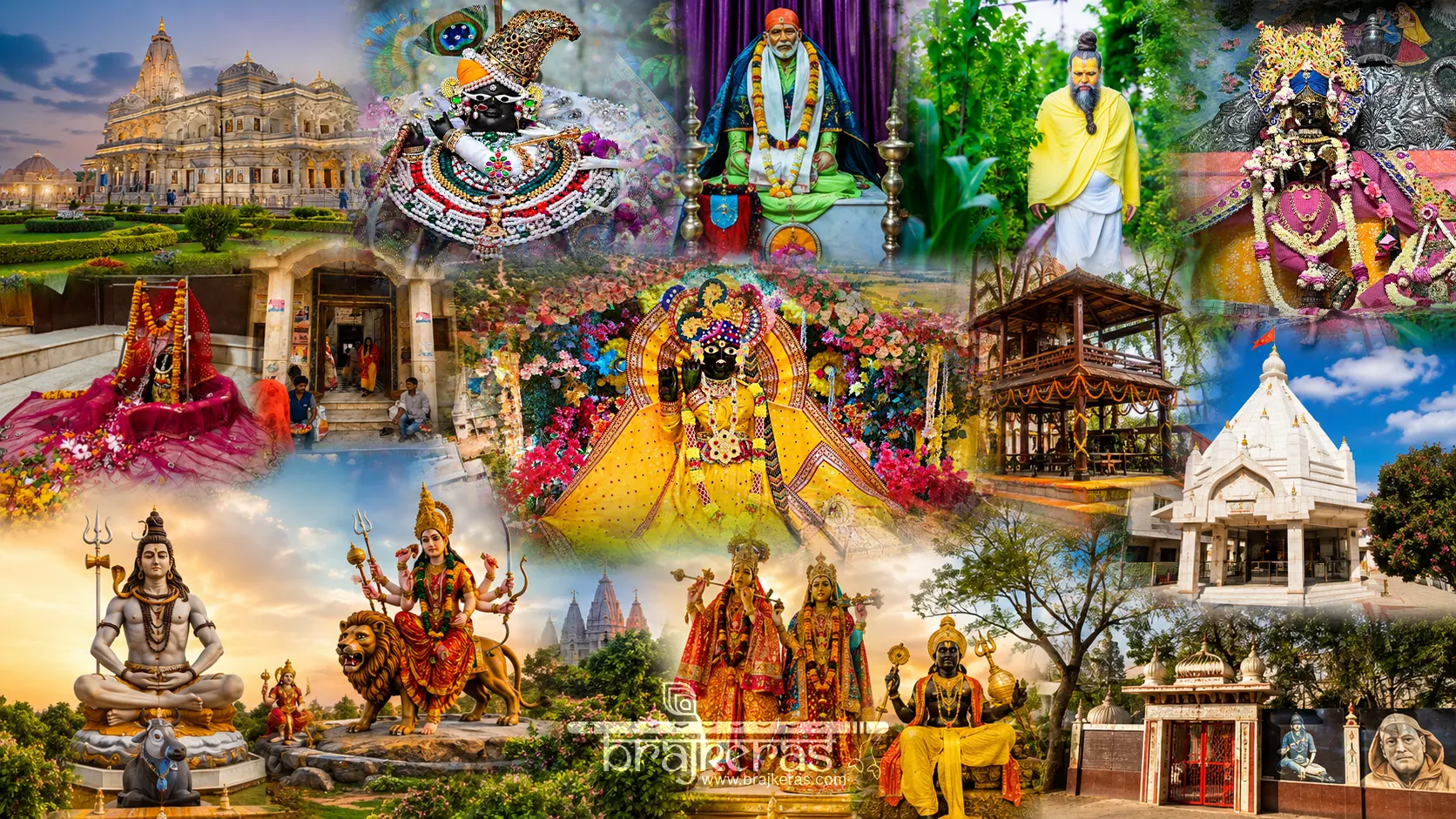
Daan Ghati
This temple remembers Krishna’s playful pastime of asking the gopis for “tax” as they carried milk products.
The atmosphere remains lively throughout the day.
Mukharvind
Devotees worship this sacred place as the mouth of Govardhan Hill.
Milk, flowers, sweets, and Tulsi leaves are lovingly offered here.
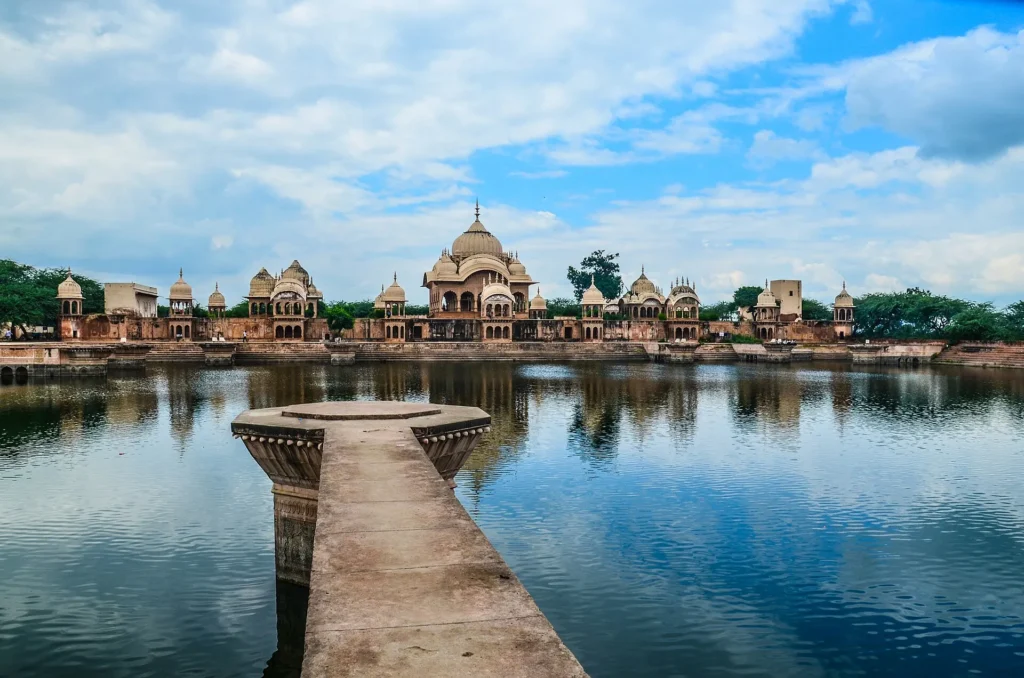
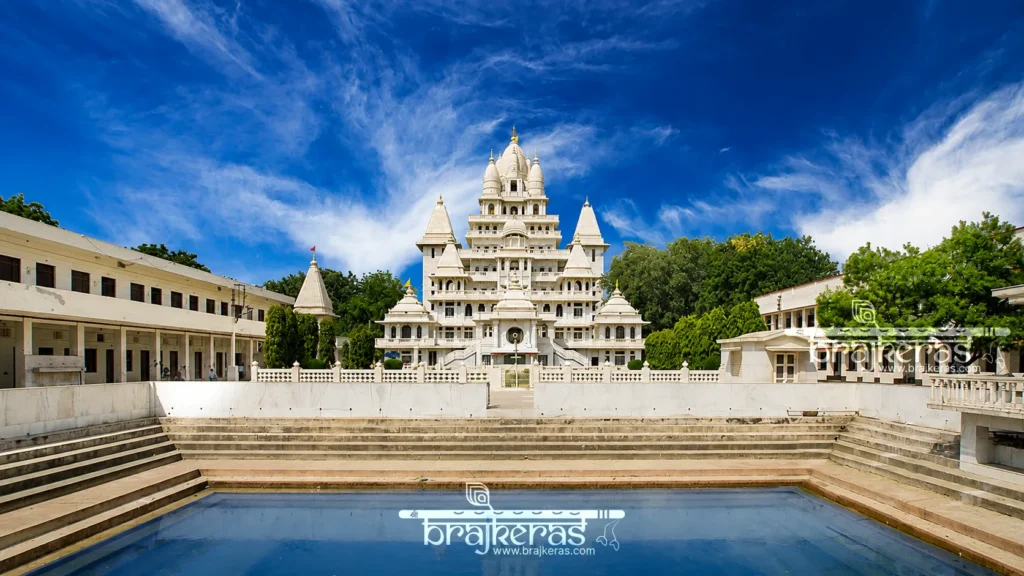
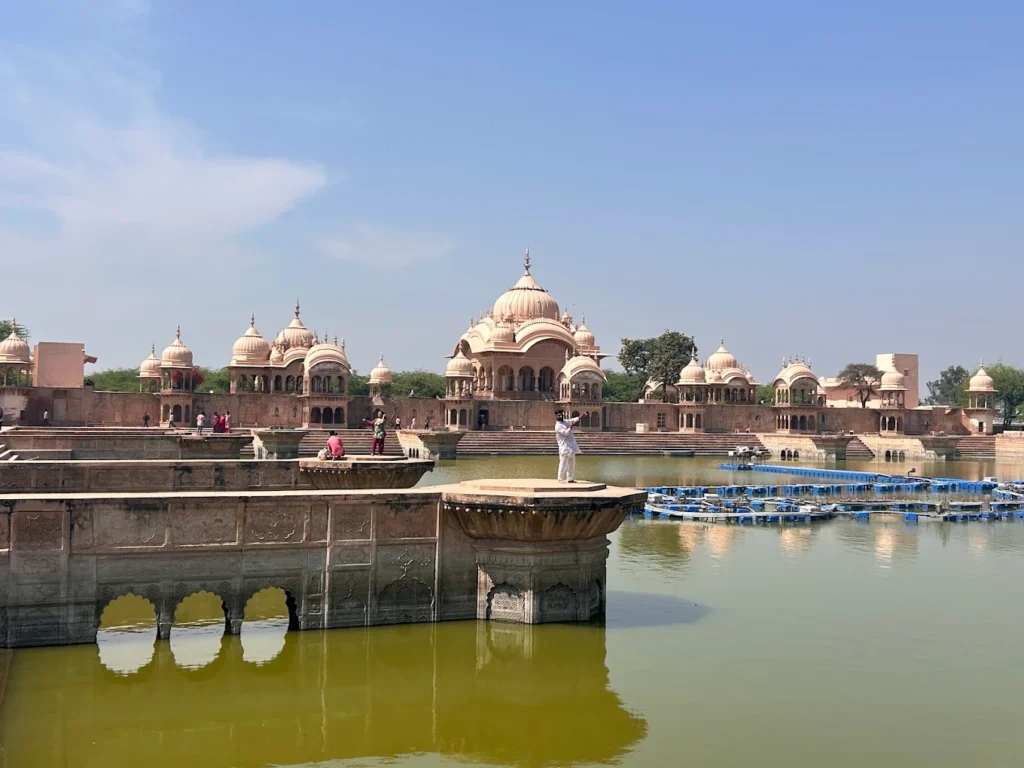
Kusum Sarovar
Many visitors pause here longer than expected.
Its sandstone architecture reflects beautifully in the calm water. Early morning and sunset create unforgettable views.
According to tradition, Radha and Krishna enjoyed flower pastimes here.
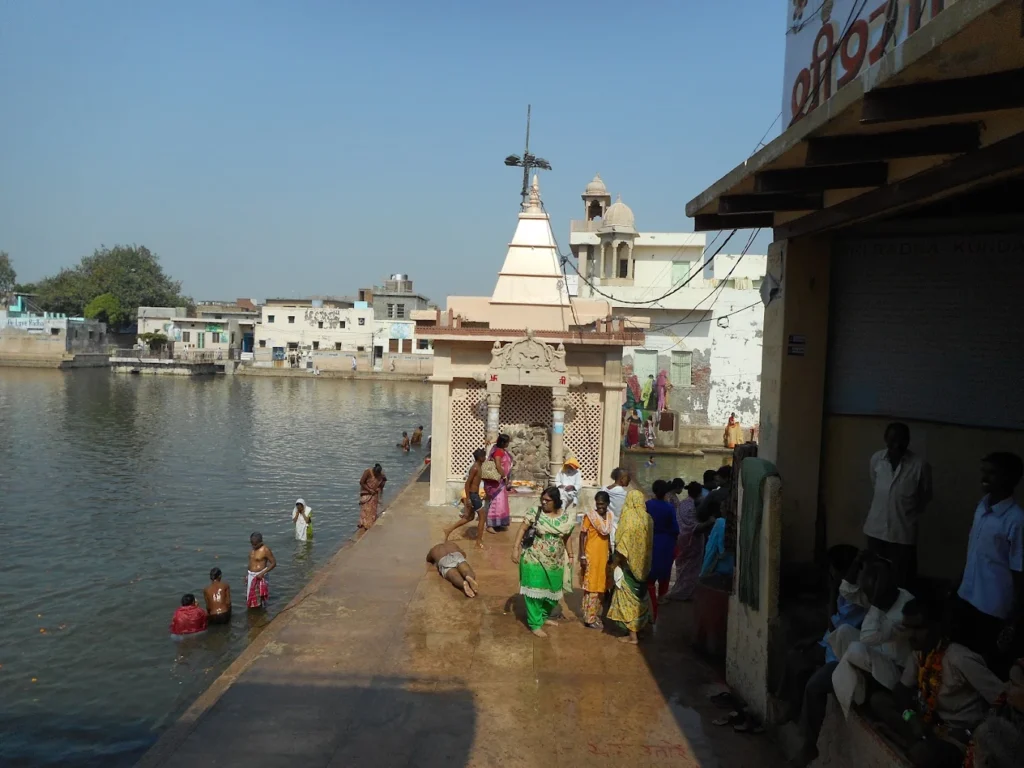
Radha Kund and Shyam Kund
Many Gaudiya Vaishnavas consider these two sacred ponds among the holiest places on Earth.
Saints have spent entire lifetimes living beside them.
Even a quiet moment here often feels different from the rest of the route.
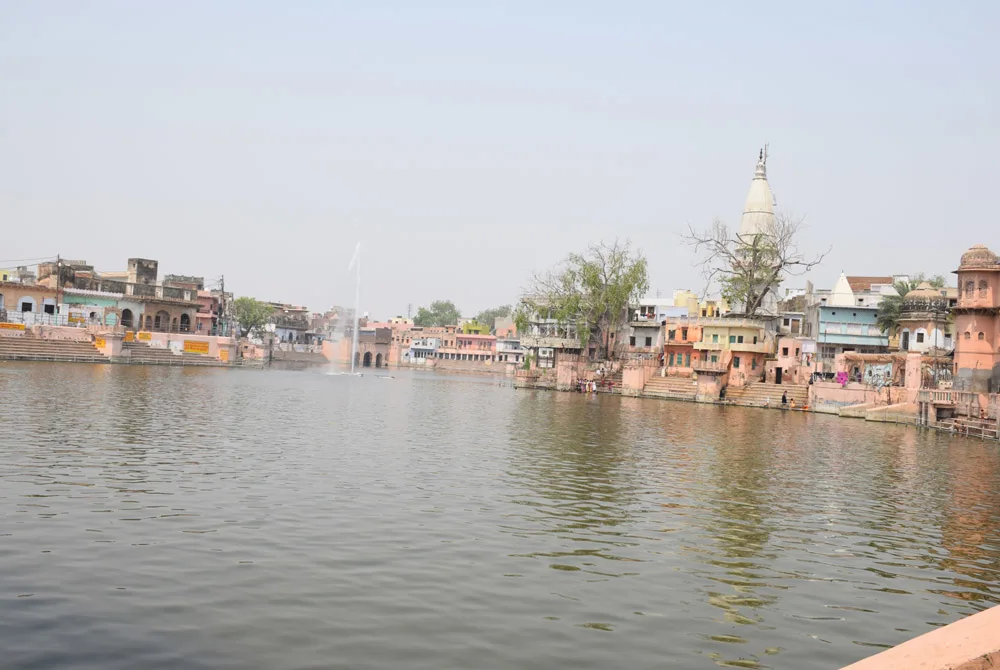
Mansi Ganga
According to tradition, Krishna manifested this sacred lake through His divine will.
Many pilgrims begin or conclude their parikrama here after offering prayers.
When Is the Best Time for Govardhan Parikrama?
The weather changes the experience quite a bit.
| Time slot | What it feels like |
| 4:00 AM to 7:00 AM | Best, peaceful, coolest air |
| 7:00 AM to 10:00 AM | Manageable, crowd building |
| 4:00 PM to 7:00 PM | Pleasant evening walk |
| Midday | Hot and tiring in most seasons |
| E-rickshaw | About 1 to 2 hours |
October through March offers pleasant temperatures for walking.
The Kartik month attracts enormous crowds. Many devotees feel this is the most spiritually rewarding time for Govardhan Parikrama.
Govardhan Puja, celebrated the day after Diwali, draws hundreds of thousands of pilgrims from across India and abroad.
Summer afternoons become extremely hot.
If visiting between April and June, begin before sunrise.
Monsoon months add greenery around Govardhan, though occasional rain can make parts of the route slippery.
A Few Simple Practices Make the Experience Better
The traditions followed during Govardhan Parikrama are beautifully simple.
Most devotees:
- Walk barefoot as a sign of respect.
- Move clockwise around the hill.
- Avoid climbing Govardhan.
- Speak softly and avoid arguments.
- Keep the surroundings clean.
- Feed cows whenever possible.
- Chant Krishna’s holy names throughout the walk.
- Offer respect to saints and fellow pilgrims.
One thing surprises many visitors.
People avoid stepping on stones from Govardhan because each stone is considered sacred.
That small act reflects the deep affection devotees have for the hill.
What Do Scriptures Say About Govardhan Parikrama?
Ancient Vaishnava texts praise Govardhan with extraordinary affection.
The Bhagavata Purana describes Govardhan as Krishna’s beloved servant.
Saint Rupa Goswami glorified Govardhan in his prayers, asking only for residence near the sacred hill.
Many saints from different traditions—including Vallabh Sampradaya, Gaudiya Vaishnavism, Nimbarka Sampradaya, and Ramanandi traditions—have performed Govardhan Parikrama throughout history.
Their teachings often repeat one beautiful idea:
Approach Govardhan with faith, not pride.
The physical walk matters.
The inner attitude matters even more.
Practical Tips Before You Begin Govardhan Parikrama
A little preparation makes the pilgrimage much more comfortable.
Carry:
- Drinking water
- A light cotton cloth during summer
- Simple snacks or fruit
- A flashlight for early morning walks
- Small cash for temple offerings
- Comfortable, modest clothing
Try starting before sunrise.
The roads remain cooler, the crowds are smaller, and the atmosphere feels wonderfully peaceful.
If you’re traveling with elderly family members, battery-operated rickshaws are available for portions of the route.
Please avoid feeding monkeys directly. They can become aggressive if food is visible.
You can split the 21 km Parikrama over 2–3 days if needed. Short on time or energy? Take an e-rickshaw; it can cover the route in about an hour, with stops at major temples.
Frequently Asked Questions
How long does Govardhan Parikrama take?
Most pilgrims complete the 21-kilometer route in five to seven hours.
Can beginners perform Govardhan Parikrama?
Yes. People of all ages complete the walk every day. Just maintain a comfortable pace and stay hydrated.
Is it necessary to walk barefoot?
Many devotees do so out of devotion. Visitors with medical conditions may wear footwear if needed.
Can the parikrama be completed at night?
Yes. Many pilgrims prefer night parikrama during summer because temperatures remain cooler. The route stays active throughout the night.
Is photography allowed?
Photography is generally allowed in open areas. Inside temples, follow local instructions and respect places where photography is restricted.
A Walk That Stays With You
Govardhan Parikrama begins with your feet, though it rarely ends there.
Some remember the temple bells. Others remember the scent of incense drifting through the morning air. A few recall elderly devotees quietly chanting while walking barefoot despite their age. Those small moments often leave the deepest impression.
Many pilgrimages are about reaching a destination.
Govardhan feels different.
The destination is the path itself.
Every step circles the hill that Krishna once lifted to protect the people of Braj. Every chant carries centuries of devotion. Every visit becomes part of a tradition that continues without interruption.
And perhaps that’s why devotees say they never truly complete Govardhan Parikrama.
They simply wait for Govardhan Maharaj to call them back again.